

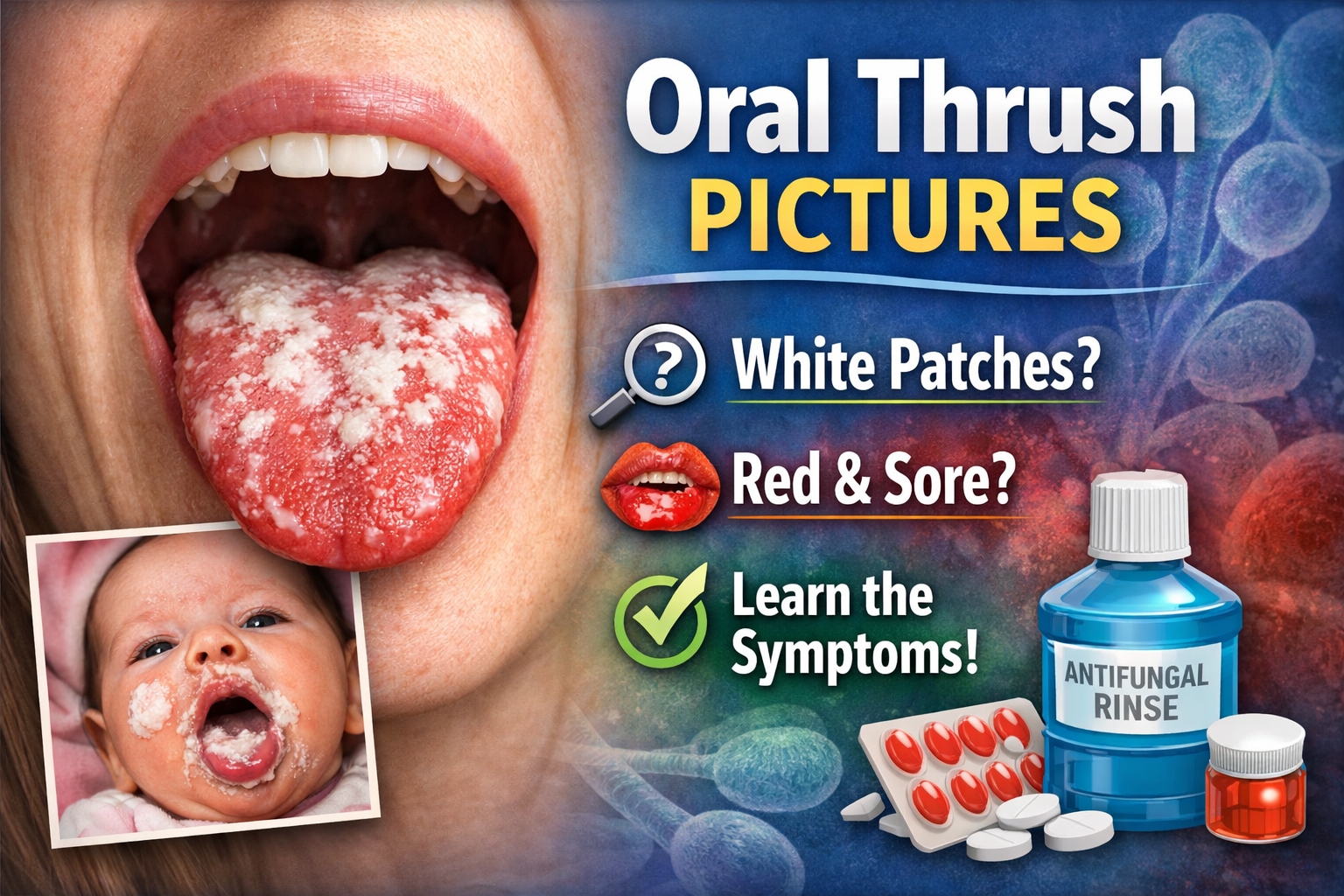
When people notice white patches or unusual sores in their mouth, one of the first things they search online is oral thrush pictures. Seeing real images helps confirm symptoms, reduce anxiety, and decide whether medical treatment is needed. Oral thrush, also known as oral candidiasis, is a common fungal infection that can affect babies, adults, and elderly people.
In this guide, you’ll learn how to recognize oral thrush through pictures, understand what causes it, and explore effective treatment and prevention methods.
What Is Oral Thrush?
Oral thrush is a fungal infection caused by an overgrowth of Candida albicans, a yeast that naturally lives in the mouth. When the immune system is weakened or the balance of bacteria is disturbed, Candida can multiply rapidly and cause visible symptoms.
This condition is common but should not be ignored, especially if it keeps coming back.
Why People Search for Oral Thrush Pictures
Searching for oral thrush pictures is often the first step people take to self-check symptoms. Images help users:
- Compare white patches with real cases
- Identify early-stage vs severe oral thrush
- Distinguish thrush from ulcers or leukoplakia
- Decide whether to seek medical advice
High-quality oral thrush images can show how the infection appears on different parts of the mouth and in different age groups.
What Do Oral Thrush Pictures Usually Show?
Most oral thrush pictures highlight the following signs:
1. White or Cream-Colored Patches
These patches often appear on:
- Tongue
- Inner cheeks
- Roof of the mouth
- Gums
- Tonsils
They may look cottage-cheese-like and can sometimes be wiped off, leaving a red or bleeding surface.
2. Redness and Inflammation
Behind the white patches, the tissue often looks red, sore, or irritated. Some oral thrush pictures clearly show inflamed areas around the tongue and lips.
3. Cracks at the Corners of the Mouth
This condition, called angular cheilitis, may also appear in oral thrush images, especially in adults.
4. Severe or Advanced Oral Thrus
Advanced pictures may show:
- Thick white plaques
- Difficulty swallowing
- Spread to the throat (esophageal thrush)
Oral Thrush Pictures in Babies vs Adults
Oral Thrush Pictures in Babies
Babies commonly develop oral thrush due to immature immune systems. Pictures often show:
- White patches on the tongue and inner cheeks
- Fussiness during feeding
- Refusal to nurse or drink milk
Thrush in babies is usually harmless but needs treatment to prevent discomfort.
Oral Thrush Pictures in Adults
In adults, oral thrush images may appear more severe. Common triggers include:
- Diabetes
- Denture use
- Smoking
- Antibiotic or steroid use
Adult oral thrush pictures may show widespread plaques and redness.
Conditions Often Confused with Oral Thrush
When viewing oral thrush pictures, it’s important to know what it’s not.
Leukoplakia
- White patches that cannot be scraped off
- Often linked to smoking
- Requires medical evaluation
Mouth Ulcers
- Painful, round sores
- No white fungal coating
Lichen Planus
- Lacy white lines inside the mouth
- Autoimmune-related condition
Comparing oral thrush pictures with these conditions helps reduce misdiagnosis.
What Causes Oral Thrush?
Oral thrush develops when Candida grows uncontrollably. Common causes include:
- Weak immune system
- Antibiotics that kill healthy bacteria
- Poor oral hygiene
- Dentures not cleaned properly
- Dry mouth
- Chemotherapy or radiation
- HIV/AIDS
Understanding the cause helps prevent recurrence.
How Is Oral Thrush Diagnosed?
Doctors often diagnose oral thrush by:
- Visual examination (similar to oral thrush pictures online)
- Gently scraping a patch for lab testing
- Reviewing medical history
In most cases, pictures and symptoms are enough for diagnosis.
Treatment Options for Oral Thrush
Antifungal Medications
Doctors may prescribe:
- Nystatin mouthwash
- Clotrimazole lozenges
- Fluconazole tablets (for severe cases)
Home Care Tips
While medication is important, these steps help recovery:
- Brush teeth twice daily
- Rinse mouth after inhaler use
- Avoid sugar-heavy foods
- Clean dentures thoroughly
Can Oral Thrush Be Prevented?
Yes. Preventive steps include:
- Maintaining good oral hygiene
- Limiting unnecessary antibiotics
- Controlling blood sugar if diabetic
- Staying hydrated
- Quitting smoking
If you’ve looked at oral thrush pictures before, prevention becomes easier once you know what to watch for.
When to See a Doctor
Seek medical help if:
- Symptoms last more than 7–10 days
- Pain interferes with eating
- Thrush keeps returning
- You have a weakened immune system
Pictures can guide you, but professional care ensures proper treatment.
Conclusion
Searching for oral thrush pictures is a smart and common way to identify early symptoms of oral candidiasis. Images provide visual clarity, reduce confusion, and encourage timely treatment. However, pictures alone are not a diagnosis.
If your symptoms match what you see in oral thrush images, consult a healthcare provider for confirmation and treatment. Early care leads to faster healing and prevents complications.
