

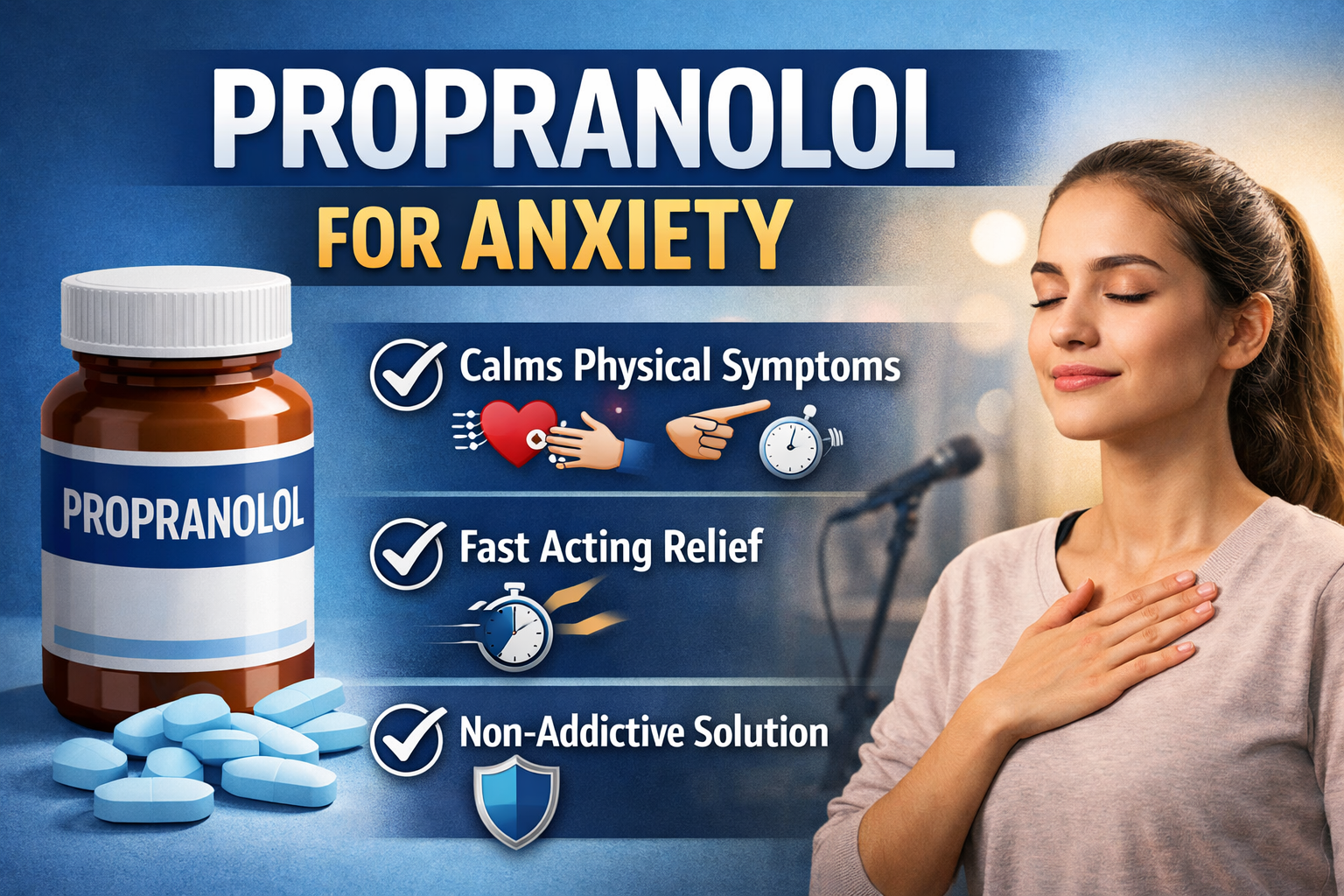
Anxiety affects millions of people worldwide, and while therapy and lifestyle changes are often the first line of treatment, medications can also play a key role. One medication that frequently comes up in anxiety discussions is propranolol. If you’re searching for clear, trustworthy information about propranolol anxiety, this guide explains everything you need to know in simple, human language.
What Is Propranolol?
Propranolol is a beta-blocker that has been used for decades to treat heart-related conditions such as high blood pressure, irregular heartbeats, and migraines. Unlike antidepressants or sedatives, propranolol works by blocking the effects of adrenaline in the body.
Because adrenaline is responsible for many physical anxiety symptoms—like a racing heart, shaking hands, and sweating—propranolol can be effective in managing certain types of anxiety.
How Propranolol Helps With Anxiety
Propranolol does not treat anxious thoughts directly. Instead, it targets the physical symptoms of anxiety. This makes it especially useful for people whose anxiety shows up strongly in their body.
Common anxiety symptoms propranolol helps reduce include:
- Rapid heartbeat
- Tremors or shaking
- Sweating
- Shortness of breath
- Blushing
- Physical tension
By calming these symptoms, many people feel more in control, which can indirectly reduce mental anxiety as well.
Types of Anxiety Propranolol Is Used
Propranolol anxiety treatment is most effective for situational or performance-based anxiety, such as:
1. Performance Anxiety
Public speaking, presentations, interviews, or stage performances often trigger intense physical anxiety. Propranolol is commonly used by speakers, musicians, and professionals to stay calm during high-pressure situations.
2. Social Anxiety (Physical Symptoms)
While propranolol doesn’t cure social anxiety disorder, it can help manage visible symptoms like shaking or a pounding heart in social settings.
3. Exam or Test Anxiety
Students sometimes use propranolol to control physical stress responses during important exams.
Note: Propranolol is not usually prescribed for generalized anxiety disorder (GAD) as a long-term solution.
Propranolol Dosage for Anxiety
The dosage for propranolol anxiety varies depending on the individual and the situation.
- Common dose: 10 mg to 40 mg
- Timing: Usually taken 30–60 minutes before an anxiety-triggering event
- Frequency: Often used occasionally, not daily
Always follow a doctor’s advice, as dosage can differ based on age, health conditions, and other medications.
How Long Does Propranolol Take to Work?
One of the biggest advantages of propranolol for anxiety is how fast it works.
- Onset: 30 to 60 minutes
- Peak effect: Around 1–2 hours
- Duration: 3 to 6 hours
This makes it ideal for short-term anxiety relief rather than ongoing treatment.
Benefits of Propranolol for Anxiety
Propranolol anxiety treatment has several benefits:
- Non-sedating (doesn’t make you feel “high”)
- Not addictive
- Works quickly
- Effective for physical anxiety symptoms
- Can boost confidence in stressful situations
Because it doesn’t alter mood or thinking directly, many people prefer it over stronger anxiety medications.
Possible Side Effects of Propranolol
Like all medications, propranolol can cause side effects. Most are mild, but it’s important to be aware of them.
Common side effects include:
- Fatigue or tiredness
- Dizziness
- Cold hands or feet
- Slow heart rate
- Nausea
Less common but serious side effects may include breathing problems, especially in people with asthma.
Who Should Avoid Propranolol?
Propranolol may not be safe for everyone. You should avoid or use caution if you have:
- Asthma or chronic lung disease
- Very low blood pressure
- Slow heart rate
- Certain heart conditions
- Diabetes (it can mask low blood sugar symptoms)
Always consult a healthcare professional before using propranolol for anxiety.
Propranolol vs Other Anxiety Medications
Unlike benzodiazepines or antidepressants:
- Propranolol does not cause dependency
- It doesn’t treat anxiety disorders long-term
- It focuses only on physical symptoms
For many people, propranolol works best when combined with therapy, breathing techniques, or lifestyle changes.
Conclusion
Propranolol can be a powerful tool for managing anxiety-related physical symptoms, especially in performance and situational anxiety. While it’s not a cure for anxiety disorders, it offers fast, effective relief without the risks of addiction or sedation.
If anxiety affects your confidence or performance in specific situations, propranolol may be worth discussing with your doctor. Used correctly, it can help you stay calm, focused, and in control.
