

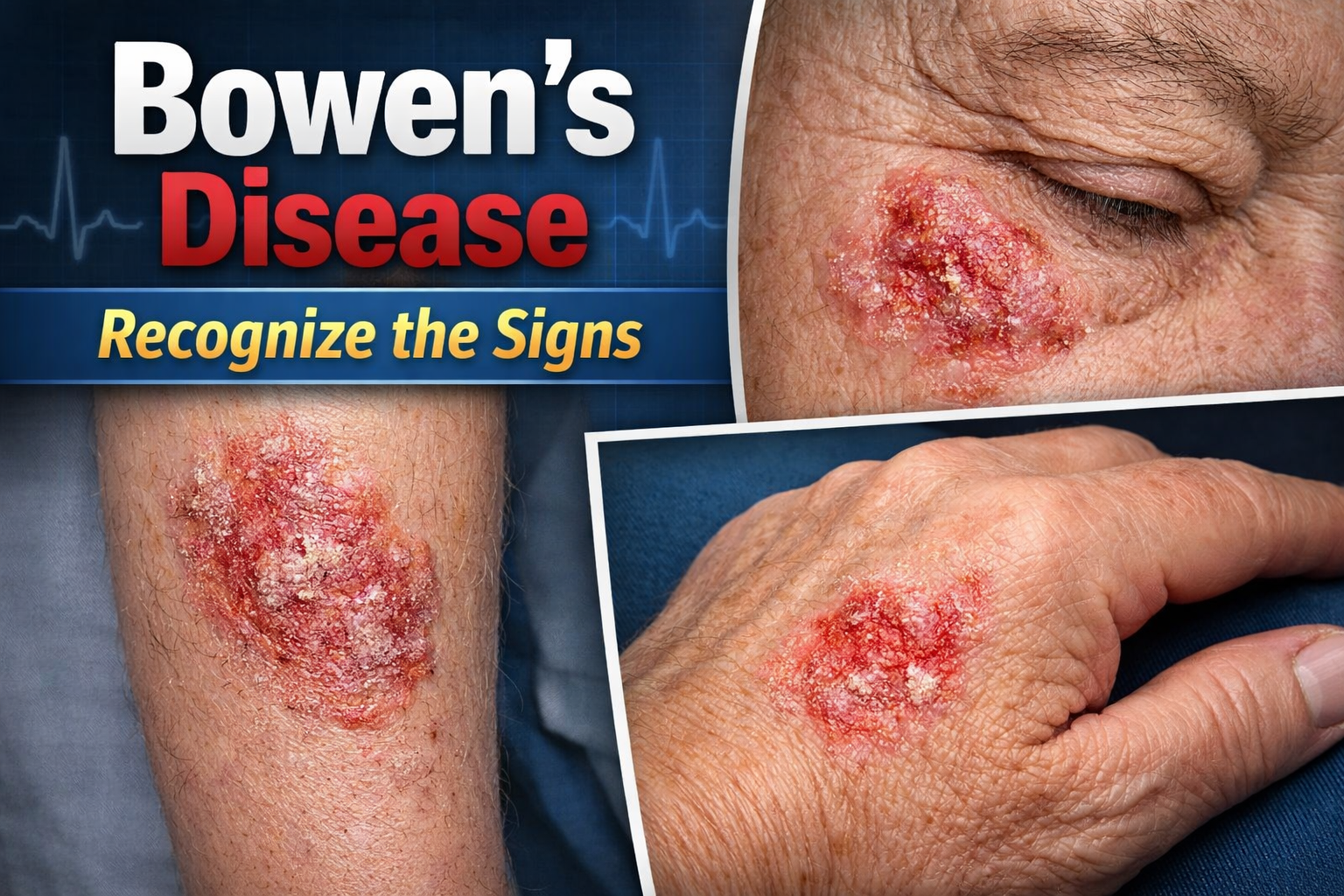
Searching for photos of Bowen’s disease is often the first step people take when they notice unusual skin changes. Bowen’s disease is a rare but important skin condition that looks different from common rashes, eczema, or fungal infections. Seeing real examples through photos helps people understand what to look for and when to seek medical advice.
In this guide, we’ll explain what Bowen’s disease is, what photos typically show, how it differs from other skin problems, and why early detection matters.
What Is Bowen’s Disease?
Bowen’s disease is an early form of skin cancer, also known as squamous cell carcinoma in situ. “In situ” means the cancer cells are limited to the top layer of the skin and have not spread deeper.
It usually develops slowly and is highly treatable when caught early. Both men and women can develop Bowen’s disease, most commonly after the age of 40.
What Do Photos of Bowen’s Disease Usually Show?
When people search for photos of Bowen’s disease, they are usually looking to compare their skin condition with real cases. While appearances can vary, most images show some common features:
1. Flat, Scaly Patches
Photos often reveal flat or slightly raised patches on the skin. These patches may look dry, rough, or flaky.
2. Red or Pink Color
Many photos show red, pink, or reddish-brown lesions. In darker skin tones, the patch may appear darker or more pigmented.
3. Well-Defined Edges
Unlike eczema or rashes, Bowen’s disease usually has clear borders, making the affected area stand out from surrounding skin.
4. Slow-Growing Lesions
Comparison photos over time often show that the patch slowly increases in size rather than healing on its own.
5. Crusting or Cracking
Some images display crusting, cracking, or slight bleeding, especially if the area is irritated.
Common Areas Shown in Photos
Photos of Bowen’s disease can appear on many parts of the body, including:
- Legs (especially lower legs)
- Arms and hands
- Face and neck
- Scalp
- Genital area (less common but possible)
Sun-exposed areas are most frequently affected, but the disease can also appear in covered regions.
Bowen’s Disease vs Other Skin Conditions (Photo Comparison Insight)
Many people confuse Bowen’s disease with other skin problems. Looking at photos can help, but it’s important to know the differences:
- Eczema: Usually itchy, comes and goes, and responds to moisturizers or steroids.
- Psoriasis: Often appears in multiple areas with thick, silvery scales.
- Fungal infections: Have ring-shaped borders and often clear in the center.
- Bowen’s disease: Persistent, slow-growing, and does not heal on its own.
If photos of Bowen’s disease closely resemble your skin lesion, a professional evaluation is essential.
Why Photos Alone Are Not Enough
While photos of Bowen’s disease are helpful for awareness, they cannot confirm a diagnosis. Many skin conditions look similar in images. Doctors usually diagnose Bowen’s disease through:
- Physical skin examination
- Dermoscopy
- Skin biopsy (most accurate method)
Relying only on photos may delay proper treatment, which is why medical confirmation is crucial.
Causes and Risk Factors Visible in Photo Searches
People viewing photos often notice patterns linked to certain risk factors, such as:
- Long-term sun exposure
- Fair skin
- Weakened immune system
- HPV infection (in some cases)
- Exposure to arsenic
- Older age
These factors increase the likelihood of developing the disease and explain why many photos show lesions on sun-exposed skin.
Treatment Options After Diagnosis
Once diagnosed, Bowen’s disease is usually treated successfully. Common treatment options include:
- Topical creams (5-fluorouracil or imiquimod)
- Cryotherapy (freezing the lesion)
- Laser therapy
- Surgical removal
- Photodynamic therapy
Early treatment prevents progression into invasive skin cancer.
When Should You See a Doctor?
You should consult a dermatologist if:
- A skin patch lasts longer than a few weeks
- The lesion slowly grows or changes shape
- It does not respond to standard skin treatments
- Photos of Bowen’s disease closely match your skin lesion
Early action can make treatment simpler and more effective.
Conclusion
Searching for photos of Bowen’s disease is a smart first step toward understanding unusual skin changes. These images help raise awareness, but they should never replace professional medical advice. Bowen’s disease is highly treatable when caught early, and recognizing its visual signs can save time, stress, and health complications.
If something on your skin doesn’t look or feel right, don’t ignore it—get it checked.
