
A heart attack can happen suddenly, but in many cases, the body gives warning signals days, hours, or even weeks before it occurs. Knowing the signs of a heart attack can help you act fast, save your life, or protect someone you love. Heart disease remains one of the leading causes of death worldwide, which makes awareness more important than ever.
In this guide, we’ll break down the early and common signs of a heart attack, symptoms in men and women, and when you should seek emergency help.
What Is a Heart Attack?
A heart attack, medically known as myocardial infarction, occurs when blood flow to the heart muscle is blocked. This blockage is usually caused by a buildup of plaque in the arteries. When oxygen-rich blood can’t reach the heart, heart tissue begins to die, leading to serious complications or death if not treated immediately.
Understanding the signs of a heart attack can reduce delays in getting medical care.
Common Signs of a Heart Attack
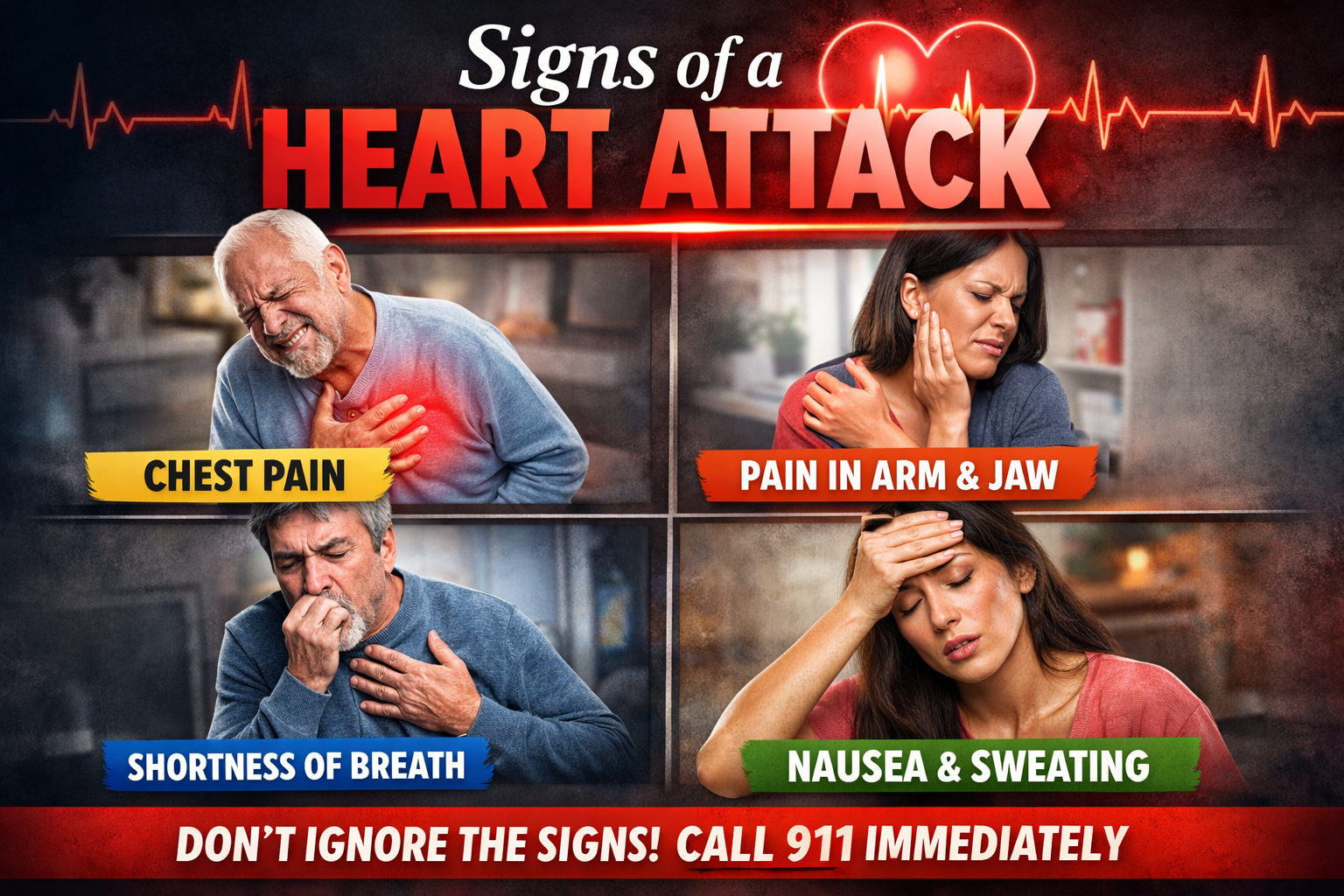
1. Chest Pain or Discomfort
The most recognized sign of a heart attack is chest pain. It often feels like:
- Pressure or squeezing
- Tightness in the chest
- A heavy weight sitting on the chest
The pain may last for several minutes or come and go. Some people describe it as mild discomfort rather than sharp pain.
2. Pain Spreading to Other Parts of the Body
Heart attack pain doesn’t always stay in the chest. It may spread to:
- Left or right arm
- Neck or jaw
- Upper back
- Shoulders
- Stomach area
This radiating pain is one of the classic signs of a heart attack, especially when combined with chest discomfort.
3. Shortness of Breath
Difficulty breathing can occur with or without chest pain. You may feel:
- Breathless while resting
- Unable to take deep breaths
- Like you just ran a marathon without moving
Shortness of breath is often an early warning sign and should never be ignored.
4. Cold Sweating
Sudden cold sweats, especially when not related to exercise or heat, can signal a heart attack. The sweat may feel clammy and unusual, often accompanied by anxiety or nausea.
5. Nausea, Vomiting, or Indigestion
Many people mistake heart attack symptoms for stomach problems. Signs include:
- Feeling nauseous
- Vomiting
- Heartburn-like discomfort
- Abdominal pain
These symptoms are more common in women but can affect anyone.
Signs of a Heart Attack in Women
Women may experience different or less obvious symptoms, which is why heart attacks in women are sometimes missed. Common signs include:
- Extreme fatigue without reason
- Lightheadedness or dizziness
- Sleep disturbances days before
- Anxiety or a sense of impending doom
- Jaw or back pain without chest pain
Recognizing these subtle signs of a heart attack can be lifesaving.
Early Warning Signs Days or Weeks Before
Not all heart attacks are sudden. Some people experience early symptoms such as:
- Persistent tiredness
- Chest discomfort during physical activity
- Shortness of breath during routine tasks
- Swelling in feet or ankles
Listening to your body and seeking medical advice early can prevent serious damage.
Silent Heart Attack: A Hidden Danger
A silent heart attack happens with little or no obvious symptoms. You may feel mild discomfort that passes quickly, leading you to ignore it. However, silent heart attacks can still cause significant heart damage and increase the risk of future heart problems.
People with diabetes, older adults, and women are more likely to experience silent heart attacks.
When to Seek Emergency Help
If you or someone near you experiences:
- Chest pain lasting more than 5 minutes
- Shortness of breath
- Fainting or sudden weakness
- Pain spreading to arms, neck, or jaw
Call emergency services immediately. Do not wait to see if symptoms go away. Quick treatment saves heart muscle and lives.
How to Reduce Your Risk
While you can’t control everything, you can lower your risk by:
- Eating a heart-healthy diet
- Exercising regularly
- Managing stress
- Quitting smoking
- Controlling blood pressure and cholesterol
- Getting regular health checkups
Prevention and awareness go hand in hand.
Conclusion
Understanding the signs of a heart attack empowers you to act fast during a medical emergency. Heart attacks don’t always look the same, and symptoms can vary by age and gender. The key is never to ignore unusual chest pain, breathing trouble, or unexplained fatigue.
If something feels wrong, trust your instincts and seek medical help immediately. Awareness today can save a life tomorrow.
